Most growing businesses in India don't face accounting problems on day one. They face them quietly, a few years later. A company starts with one office. Then a second branch opens. Then a warehouse. Then a sales unit in another city – across different GST registrations, all linked to the same PAN. From the outside, everything looks organised. Sales are happening, operations are running smoothly.
But inside the accounts department, the workload gradually increases. Different branches maintain different Tally companies. GST returns require manual consolidation. TDS files are prepared branch by branch. Management asks for a consolidated view, and the answer comes late - often with disclaimers. Inter-branch stock never seems to match perfectly. And no one is fully confident that the numbers reflect reality at one point in time.
In our decades of working with Indian businesses using Tally , this situation is extremely common. Not because businesses are doing something “wrong”, but because the structure used earlier no longer supports the scale of operations. This is where structure, not software, starts making all the difference.

Why Separate Tally Companies Feel Right - Until They Don't
When a new branch opens, creating a separate Tally company feels like the safest decision. Each location has its own books. Each accountant focuses only on their branch. There's a sense of control, ownership, and clarity at a local level.
The problem is that compliance and reporting don't work in isolation. GST, TDS, PAN-based reporting, and management MIS don't recognize branch boundaries. They demand a single financial picture. When data is spread across multiple Tally companies, that picture starts becoming fragmented.
Initially, the effort required to combine these pieces is manageable. Over time, it becomes exhausting - and risky.
Multiple GST Registrations, One PAN - Accounting Challenges
This is an important point many businesses overlook. While GST compliance is registration-wise, businesses operating under a single PAN are managed, reviewed, and controlled at a PAN level for accounting, MIS, and statutory reporting. When accounts are maintained across multiple isolated Tally companies, the accounting structure no longer mirrors this reality.
That mismatch creates friction everywhere:
- GST filings
- TDS reporting
- Audits
- Management reviews
The issue isn't effort. It's alignment.
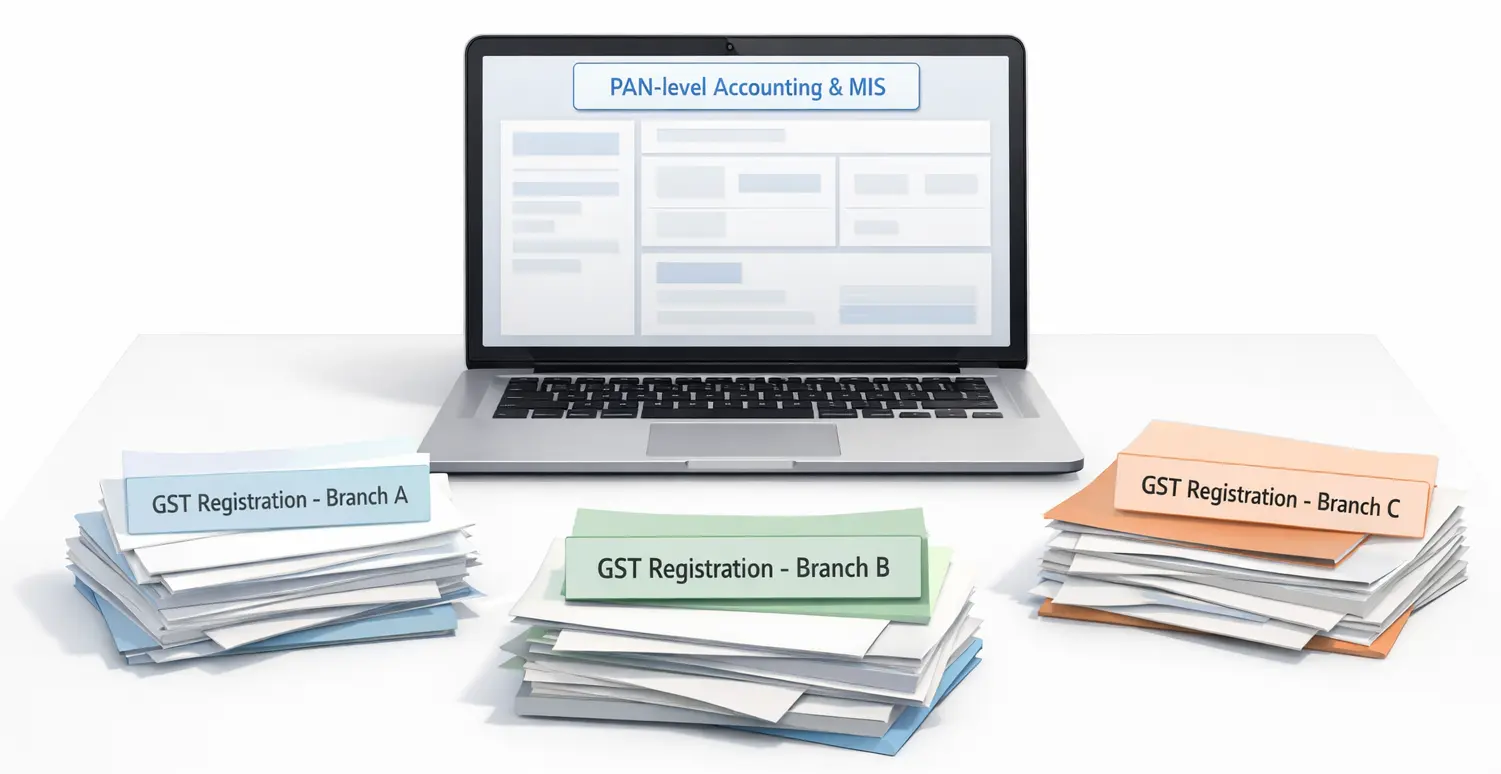
This is why businesses operating multiple branches across different GST registrations, but under the same PAN, need a structured Tally setup that allows centralised control with GST registration-wise and branch-wise visibility – instead of maintaining completely isolated companies.
Understanding Multiple Branch Management in Tally
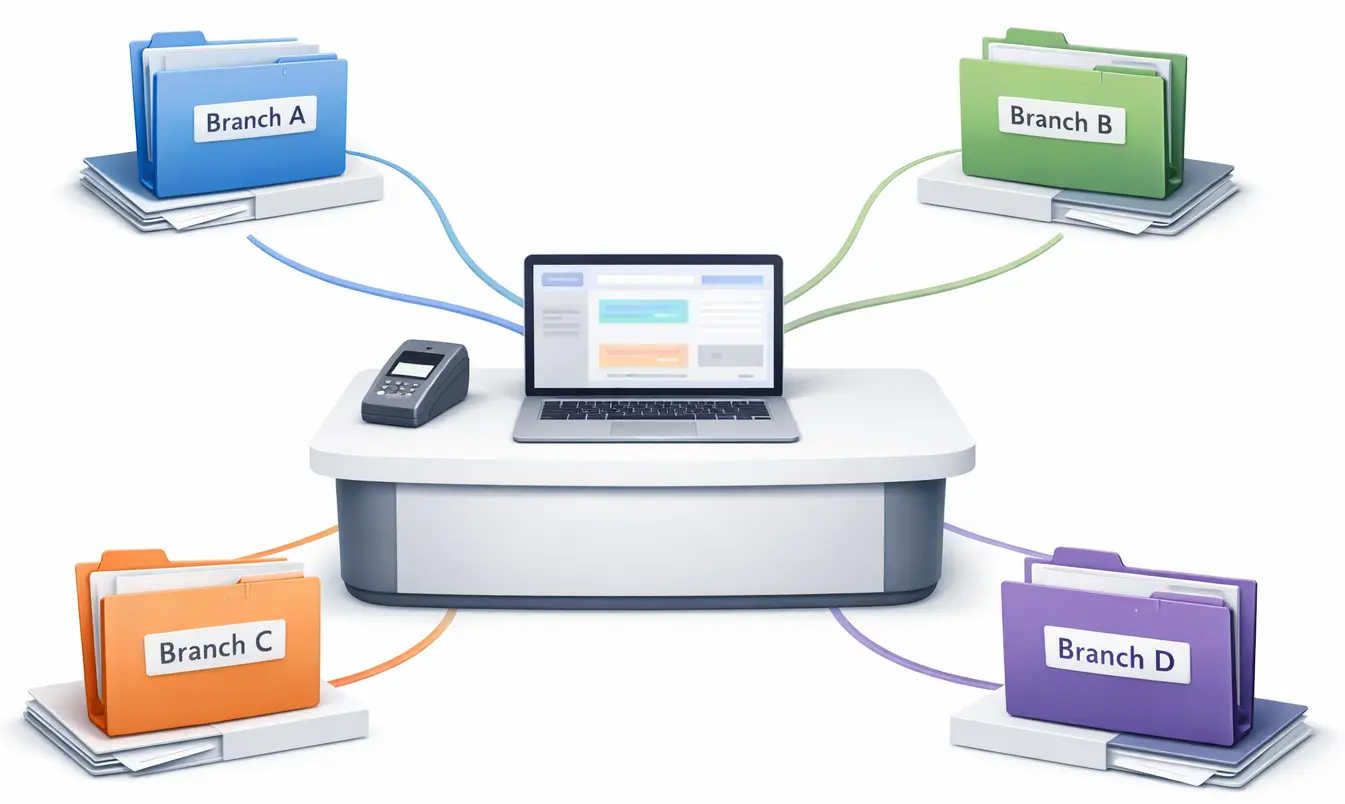
Multiple Branch Management is not about dumping all transactions into one place without control. It is about centralised data with structured separation.
In simple terms:
- All branches operate within one Tally company
- Each branch remains clearly identifiable
- Transactions are tagged and controlled branch-wise
- Masters remain common and consistent
- Reporting can be viewed branch-wise or consolidated instantly
This approach gives businesses the best of both worlds – branch-level operational clarity and organisation-level financial control.
Simplifying GST Compliance Across Branches
GST is usually the first place where structural cracks appear. When each branch is maintained in a separate Tally company, GST data is generated independently. Before returns can be filed, data has to be exported branch-wise, consolidated manually, verified again, and then uploaded.
On paper, this sounds routine. In practice, it creates pressure every single month. Small gaps go unnoticed. Invoices get missed. Amendments increase. Instead of reviewing data, the accounts team spends most of its time assembling data.
With Multiple Branch Management, this changes at a structural level. All branch transactions live inside one Tally company. Branches remain separate for tracking, but the GST data is already consolidated by design. Returns can be prepared and uploaded directly – without manual merging, without last-minute coordination.
What earlier required follow-ups across locations becomes a single, accountable process.

Streamlining TDS and Statutory Reporting
The same pattern appears in TDS compliance. With separate Tally companies, TDS reports are generated branch-wise and then merged before upload. Reconciliation becomes unavoidable, and responsibility often feels diffused across locations.
In a unified branch structure, TDS data flows from one company. Reports are generated once. Uploads become straightforward.
This predictability doesn't just save time. It changes the tone of statutory work. Deadlines stop feeling like emergencies. Reviews become possible. Compliance starts functioning like a process, not a scramble.
Clear Consolidated View for Management
One of the quieter but most powerful shifts happens in management reporting. In fragmented setups, financial conversations often come with conditions. Numbers are provisional. One branch is pending. Stock data is still being reconciled. Decisions are made with caveats.
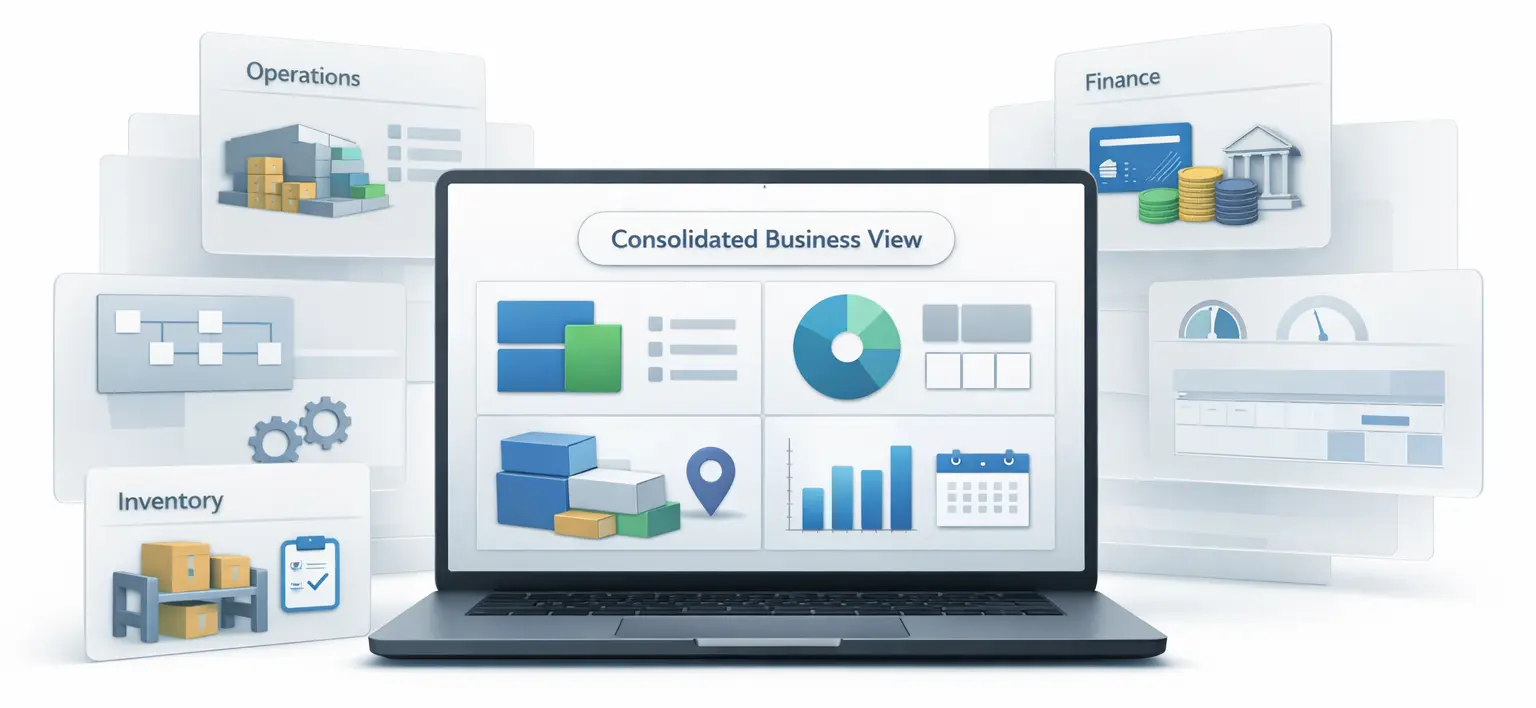
Once all branches sit within a single Tally company, those disclaimers slowly disappear. Branch-wise income, expenses, assets, and liabilities are always available. Consolidated views don't require spreadsheets. Performance comparisons don't depend on manual MIS preparation.
Management stops seeing a collection of branch reports. What they start seeing is one organisation viewed from different angles.
Managing Inter-Branch Stock Transfers
Stock movement between branches is a daily operational reality - especially for distributors, warehouses, and retail chains. In multi-company setups, inter-branch transfers usually lead to:
- Manual purchase and sales entries
- Date mismatches
- Reconciliation delays
- Stock differences that surface only during audits
With Multiple Branch Management, inter-branch transfers are recorded cleanly within the same company. Accounting entries are generated systematically, and reconciliation reports help align stock receipt dates without manual intervention. Stock movement reflects operational reality - not accounting workarounds.
Payments, Receipts, and Outstanding Control
Another hidden challenge in fragmented setups is payment and receipt accounting. Often, payments are handled at the head office, while branch companies maintain their own purchase and sales records. This leads to journal entries, proxy ledgers, and unnecessary complexity. With a unified branch structure:
- Payments and receipts are recorded against the actual party
- Branch-wise outstanding remains visible
- Head office maintains control without duplication
Receivables and payables start making sense again.
Operational Benefits Businesses Don't Anticipate Early
Beyond compliance and reporting, the right structure brings everyday operational advantages:
- Uniform masters across branches, reducing errors
- Better Tally performance by avoiding multiple instances
- Branch-wise invoice and cheque printing from one system
- Consolidated outstanding reports without Excel
- Branch-wise and user-wise access control
- Clear stock visibility across locations
These are not “extra features”. They are outcomes of correct system design.
Why Tally Structure Matters in the Long Run
Tally is a powerful system. But its real strength shows only when it is structured correctly. In our experience, most multi-branch challenges are not caused by lack of features, but by early design choices that were never revisited as the business grew.
Multiple Branch Management is not about complexity. It is about clarity, control, and continuity. When structure aligns with operations and compliance, Tally moves from reactive handling to structured control and starts functioning like a reliable backbone.
Frequently Asked Questions (FAQs)
Yes. Businesses operating under a single PAN with multiple GST registrations can manage all registrations within one Tally company using a properly designed Multiple Branch Management structure. This allows GST registration-wise tracking while keeping accounting, MIS, and statutory reporting centralised.
Maintaining separate Tally companies for each branch often leads to manual consolidation for GST, TDS, audits, and management reporting. Since compliance and reviews are PAN-based, fragmented accounting structures increase effort, delays, and the risk of inconsistencies.
With Multiple Branch Management, all branch transactions are recorded within one Tally company while remaining identifiable branch-wise. GST data is consolidated by design, eliminating manual exports, merging, and repeated verification before filing returns.
No. A correctly structured Tally setup ensures full branch-wise visibility for income, expenses, stock, outstanding, and GST data. At the same time, management can view consolidated reports instantly without relying on spreadsheets or external MIS tools.
In a unified branch structure, payments and receipts can be handled centrally while remaining linked to the correct branch and party. This avoids proxy ledgers and duplicate entries, ensuring branch-wise outstanding and overall receivables and payables remain accurate and easy to track.